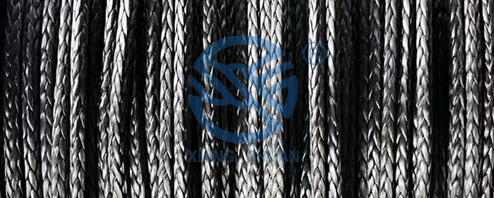
The performance disparity between Endless Slings and traditional lifting slings stems from fundamental differences in design philosophy, material application, and operational mechanics. These distinctions manifest across critical performance metrics such as load distribution, flexibility, durability, and operational efficiency, making each type suitable for distinct industrial scenarios.
Structural Design and Load Distribution
Endless slings, characterized by their continuous loop construction, redefine load distribution dynamics compared to traditional counterparts like chain slings or wire rope slings. The seamless loop design eliminates stress concentration points at hardware connections, a common vulnerability in traditional slings. When under tension, the load spreads uniformly across the entire contact surface, reducing localized strain. This even distribution allows endless slings to handle dynamic loads more effectively—sudden weight shifts or vibrations during lifting cause minimal structural stress, whereas traditional slings with hooks or shackles often experience intensified pressure at connection points, increasing wear and failure risks.
Traditional slings, reliant on segmented structures with links or strands, distribute loads through sequential force transmission. Chain slings, for instance, transfer weight through individual links, each acting as a potential failure point if deformed or worn. Wire rope slings similarly concentrate stress at termination fittings, where cables are crimped or swaged. These design limitations make traditional slings more susceptible to load imbalance, especially when lifting irregularly shaped objects. Endless slings, by contrast, conform to the load’s contours, maximizing contact area and minimizing point-loading—a critical advantage when handling fragile or unevenly weighted items like concrete pipes or machinery components.
Flexibility and Conformability
Flexibility represents a defining performance gap. Endless slings, typically crafted from high-tenacity synthetic fibers like polyester or nylon, exhibit exceptional pliability. This allows them to wrap around loads with minimal force, adapting to irregular shapes without compromising stability. In applications involving curved surfaces or unevenly distributed weights—such as lifting fabricated steel structures or industrial equipment—this conformability reduces the need for auxiliary rigging, streamlining operations. Traditional slings, particularly chain and wire rope varieties, possess inherent rigidity. Their stiff construction resists deformation, requiring precise positioning to ensure secure contact. This rigidity often necessitates additional padding or custom rigging solutions to prevent load damage, increasing setup time and operational complexity.
The flexibility of endless slings also enhances maneuverability in confined spaces. Their lightweight design—significantly lighter than steel-based traditional slings—reduces operator fatigue during manual handling. In contrast, the weight of chain or wire rope slings can limit maneuverability, especially in overhead lifting scenarios where precise positioning is critical. This difference becomes pronounced in industries like construction or manufacturing, where frequent repositioning of slings is standard practice.
Abrasion Resistance and Environmental Tolerance
Durability under varying environmental conditions reveals another performance divide. Endless slings excel in environments where corrosion or chemical exposure is a concern. Synthetic materials resist rust, oxidation, and degradation from oils, solvents, and mild acids—common hazards in manufacturing plants or maritime settings. Traditional steel slings, however, require regular maintenance to combat corrosion; even galvanized chain slings degrade over time in high-humidity environments, weakening load-bearing capacity.
Abrasion resistance presents a more nuanced comparison. While chain slings offer superior resistance to sharp edges or rough surfaces, their rigid links can damage delicate loads like polished metal parts or composite materials. Endless slings, though more prone to cuts from sharp edges, mitigate this risk through specialized coatings or reinforced webbing in high-wear areas. Modern synthetic blends, such as those incorporating aramid fibers, enhance cut resistance without sacrificing flexibility, narrowing the gap with traditional slings in abrasive environments.
UV resistance is another critical factor. Extended exposure to sunlight can degrade synthetic fibers, but manufacturers address this with UV-stabilized materials in endless slings, ensuring longevity in outdoor applications. Traditional wire rope slings, while UV-resistant, suffer from lubricant breakdown under prolonged sunlight, requiring more frequent re-lubrication to maintain performance.
Operational Efficiency and Safety
Endless slings outperform traditional slings in setup speed and safety margins. Their lightweight design reduces installation time—workers can quickly adjust the loop size to match load dimensions without specialized tools. Traditional slings, 尤其是 chain varieties, require time-consuming adjustments using shackles or hooks, increasing downtime between lifts. This efficiency translates to higher throughput in high-volume operations like warehouse loading or assembly line logistics.
Safety features also differ significantly. Endless slings exhibit predictable failure modes: they stretch gradually under excessive load, providing visual warning before catastrophic failure. This elasticity acts as a shock absorber, reducing impact forces on both the sling and the lifted object. Traditional wire rope slings, by contrast, often fail suddenly without warning when overloaded, posing greater risks to personnel and equipment. Chain slings, while more forgiving, can suffer from hidden fatigue cracks in links, which are difficult to detect during visual inspections.
Load capacity-to-weight ratios further favor endless slings. Advanced synthetic materials allow them to achieve comparable load ratings to steel slings at a fraction of the weight, reducing the overall load on lifting equipment like cranes or hoists. This not only extends the lifespan of lifting machinery but also enables safer operation by minimizing excess weight in the system.
Maintenance Requirements and Lifespan
The maintenance burden differs drastically, impacting long-term performance. Endless slings require minimal upkeep: regular visual inspections for cuts, fraying, or chemical damage suffice for most applications. They dry quickly after exposure to moisture, resisting mold growth—a common issue with traditional slings that trap water in links or strands. Traditional slings demand more rigorous maintenance: chain slings need periodic lubrication to prevent friction-induced wear, while wire rope slings require frequent re-tensioning and strand integrity checks. These maintenance routines, while necessary, increase operational costs and downtime.
Lifespan varies based on usage conditions, but endless slings often outlast traditional slings in moderate-duty applications. Their resistance to corrosion and chemical degradation reduces premature replacement, though they are more susceptible to damage from extreme heat or sharp edges. Traditional steel slings, while durable in harsh environments, suffer from cumulative wear at connection points, requiring component replacement long before the entire sling reaches end-of-life.
Conclusion
The performance divergence between endless slings and traditional lifting slings reflects their distinct design priorities: endless slings prioritize flexibility, uniform load distribution, and operational efficiency, while traditional slings emphasize ruggedness and resistance to extreme conditions. Understanding these differences is crucial for selecting the optimal sling type—endless slings excel in dynamic, precision-critical operations with irregular loads, while traditional slings remain indispensable in heavy-duty, high-abrasion environments. As industrial lifting demands evolve, the choice between them hinges on balancing these performance attributes against specific operational needs.

 Español
 Portugues
 Pусский
 Français
 Deutsch
 日本語
日本語
 한국어
한국어
 العربية
 Italian
 Nederlands
 Ελληνικά
 Svenska
 Polski
 ไทย
ไทย
 Turkish
 हिन्दी
 Indonesia
 Melayu
 Tiếng Việt
 dansk
dansk
 Magyar
 বাংলা
বাংলা
 čeština
 Soomaali
 မြန်မာ
 فارسی
فارسی
 українська
 norsk
norsk
 Gaeilge
 беларускі
 Română
 ພາສາລາວ
 Filipino
 lietuvių
 Cymraeg
 Suomalainen
 o'zbek
 اردو
اردو
 հայերեն
 سنڌي
سنڌي
 Hrvatski
 íslenskur
 galego
 català
 Zulu South Africa
 ಕನ್ನಡ
ಕನ್ನಡ
 Indonésia Sunda
 Кыргызча
 тоҷикӣ
 Србија
 Hawaii
 नेपाल
नेपाल
 euskara
 latvija
 پښتو
پښتو
 საქართველოს
 bosna
bosna
 Eesti
Eesti
 Azerbaijani
 Shqipëria
 Malta
Malta
 Kikongo
 Eʋegbe
 Fiji
Fiji
 Tonga
Tonga
 中文站
中文站

 +86-514-88253368



 Phone
Phone
Comment
(0)