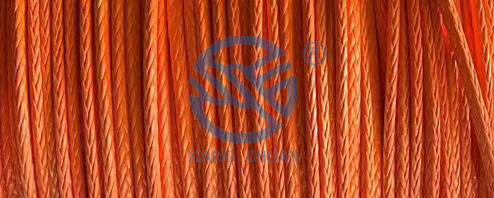
When selecting a rope for industrial, recreational, or daily use, strength is often the most critical factor—whether securing a boat in rough seas, lifting heavy construction materials, or supporting a climber on a rocky slope. Among the countless rope types available, double braided Nylon Rope has gained a reputation for reliability, but how does its strength truly stack up against other common ropes? To answer this question, we must first break down what defines “rope strength” (tensile strength, shock absorption, abrasion resistance, and durability under stress) and then compare Double Braided Nylon Rope to its key competitors: single braided nylon rope, twisted rope, natural fiber rope (cotton, hemp), and synthetic alternatives like polyester rope. By examining these comparisons, we can identify when double braided nylon rope’s strength advantages make it the superior choice—and when other ropes might be more suitable.
Understanding Rope Strength: Key Metrics to Compare
Before diving into comparisons, it’s essential to define the metrics that determine a rope’s “strength” in real-world use:
Tensile Strength: The maximum weight a rope can hold before breaking, measured in pounds (lbs) or newtons (N). This is the most commonly cited strength metric but does not account for factors like wear or environmental stress.
Shock Absorption: A rope’s ability to stretch slightly under sudden loads (e.g., a falling climber or a boat pulled by a gust of wind) to reduce strain. Poor shock absorption can lead to sudden snapping, even if the rope’s tensile strength exceeds the load.
Abrasion Resistance: How well a rope withstands friction against rough surfaces (e.g., rock, metal, or concrete). A rope with high tensile strength but low abrasion resistance may weaken quickly and fail prematurely.
Environmental Durability: Strength retention under exposure to water, UV rays, salt, or chemicals. A rope that loses strength when wet or sun-damaged is less reliable in outdoor or marine settings.
Double braided nylon rope’s strength profile is shaped by two core elements: its double braided structure (an inner braid nested within a separate outer braid) and the inherent properties of nylon. The inner braid provides core tensile strength, while the outer braid adds protection against abrasion and distributes stress evenly across the rope. Nylon itself is a synthetic polymer with high elasticity (up to 25% stretch before breaking) and resistance to water and rot. Together, these features create a rope that excels in both raw strength and real-world durability—but how does this compare to other ropes?
1. Double Braided Nylon Rope vs. Single Braided Nylon Rope: Structure Drives Strength
Single braided nylon rope and double braided nylon rope share the same material (nylon) but differ drastically in structure—and thus in strength. Single Braided Rope is made from a single layer of interwoven strands, often with a hollow core or a lightweight filler. While it is lighter and more flexible than Double Braided Rope, its strength is limited by its single-layer design.
Tensile Strength Comparison
For ropes of the same diameter (e.g., ½ inch), double braided nylon rope typically has 30–50% higher tensile strength than single braided nylon rope. For example:
A ½ inch single braided nylon rope has a tensile strength of approximately 2,800–3,200 lbs.
A ½ inch double braided nylon rope has a tensile strength of 4,200–5,000 lbs.
This difference stems from the double braided rope’s inner core, which acts as a secondary load-bearing layer. When weight is applied, the inner and outer braids share the stress, whereas a single braided rope relies entirely on its outer strands—if one strand frays or breaks, the entire rope’s strength drops significantly.
Shock Absorption and Abrasion Resistance
Both rope types benefit from nylon’s elasticity, but double braided rope’s outer layer provides better shock absorption in high-stress scenarios. For instance, in marine mooring, a single braided rope may stretch enough to absorb minor shocks but can snap if hit by a sudden wave; double braided rope’s dual layers distribute the shock more evenly, reducing the risk of failure.
Abrasion resistance is another key gap: single braided rope’s exposed strands wear down quickly when rubbed against metal cleats or rock surfaces. Double braided rope’s outer braid acts as a protective barrier, shielding the inner core from friction. Tests show that after 100 cycles of rubbing against a concrete surface, a single braided nylon rope loses 25–30% of its tensile strength, while a double braided nylon rope loses only 8–12%.
When to Choose Which?
Single braided nylon rope is suitable for light-duty tasks (e.g., hanging outdoor lights, securing lightweight gear) where weight and flexibility matter more than maximum strength. For heavy-duty use (e.g., boat docking, climbing anchors), double braided nylon rope’s superior strength and durability make it the better choice.
2. Double Braided Nylon Rope vs. Twisted Rope: Braided vs. Twisted Strength
Twisted rope (also called laid rope) is one of the oldest and most common rope types, made by twisting three or more strands together. It is widely used in agriculture, construction, and general purpose applications, but its strength profile differs significantly from double braided nylon rope. Twisted rope can be made from nylon, polyester, or natural fibers—here, we focus on nylon twisted rope, the most direct competitor to double braided nylon rope.
Tensile Strength and Stress Distribution
Twisted rope’s tensile strength is lower than double braided rope of the same diameter and material. A ½ inch nylon twisted rope has a tensile strength of 3,500–3,800 lbs, compared to 4,200–5,000 lbs for double braided rope. The reason lies in how stress is distributed: twisted rope’s strands rely on friction to hold together under load. When weight is applied, the strands can slip against each other, reducing the rope’s overall load-bearing capacity. Double braided rope’s interlocked inner and outer braids eliminate this slipping, creating a more stable structure that retains strength even under uneven loads.
Durability Under Environmental Stress
Twisted rope is more prone to “hockling” (kinking or twisting into knots) than double braided rope. Hockling weakens the rope by creating points of concentrated stress—even a small kink can reduce a twisted rope’s tensile strength by 15–20%. Double braided rope’s smooth, balanced structure resists hockling, making it more reliable in applications where the rope is frequently moved or adjusted (e.g., construction crane lines, sailing sheets).
In wet conditions, twisted rope also struggles: water can seep between its strands, adding weight and increasing friction between strands. Over time, this can lead to premature wear. Double braided rope’s tight outer braid repels water more effectively, keeping the inner core dry and maintaining its strength—tests show that a double braided nylon rope retains 90–95% of its tensile strength when wet, compared to 75–80% for a twisted nylon rope.
When to Choose Which?
Twisted rope is cheaper and easier to splice than double braided rope, making it suitable for low-stress, temporary tasks (e.g., tying down a tarp, marking a construction zone). For long-term, high-stress use (e.g., marine mooring, heavy lifting), double braided nylon rope’s higher strength and resistance to hockling and water damage make it a better investment.
3. Double Braided Nylon Rope vs. Natural Fiber Rope: Synthetic vs. Natural Strength
Natural fiber ropes—made from cotton, hemp, jute, or sisal—have been used for centuries, but their strength is no match for double braided nylon rope in most scenarios. Natural fibers are biodegradable and affordable, but they lack the durability and load-bearing capacity of synthetic nylon.
Tensile Strength: A Dramatic Gap
The tensile strength of natural fiber rope is a fraction of double braided nylon rope’s. For example:
A ½ inch hemp rope has a tensile strength of only 800–1,200 lbs.
A ½ inch cotton rope has an even lower tensile strength of 600–900 lbs.
This gap makes natural fiber rope unsuitable for heavy-duty tasks. Even for light use, natural fiber rope’s strength degrades rapidly over time: hemp rope loses 30–40% of its tensile strength after six months of outdoor exposure, while double braided nylon rope retains 85–90% of its strength after two years.
Environmental Vulnerabilities
Natural fiber rope’s biggest weakness is its vulnerability to water, rot, and pests. Cotton and hemp absorb water quickly, becoming heavy and prone to mold and mildew—after a single rainstorm, a hemp rope can lose 50% of its strength. Double braided nylon rope’s water resistance eliminates this issue; it remains lightweight and strong even after prolonged submersion (e.g., in marine docking).
Pests like rodents and insects also pose a threat to natural fiber rope—they can chew through hemp or cotton strands in days. Nylon is inert to most pests, making double braided nylon rope ideal for storage in barns, warehouses, or outdoor sheds.
When to Choose Which?
Natural fiber rope is suitable for decorative purposes (e.g., garden trellises, rustic decor) or light-duty, temporary tasks where biodegradability is a priority (e.g., marking a hiking trail that will be removed later). For any task requiring reliability or strength—from boating to construction—double braided nylon rope is the clear choice.
4. Double Braided Nylon Rope vs. Polyester Rope: Synthetic Competitors
Polyester rope is another popular Synthetic Rope, often compared to nylon for its strength and durability. Polyester has lower elasticity than nylon (only 10–15% stretch) and higher UV resistance, but how does its overall strength compare to double braided nylon rope?
Tensile Strength and Shock Absorption
For ropes of the same diameter, polyester rope has slightly lower tensile strength than double braided nylon rope. A ½ inch double braided polyester rope has a tensile strength of 3,800–4,500 lbs, compared to 4,200–5,000 lbs for double braided nylon rope. The bigger difference is in shock absorption: polyester’s low elasticity makes it poor at handling sudden loads. For example, if a 200-lb climber falls 6 feet, a double braided nylon rope will stretch to absorb the impact, reducing the force on the climber to 800–1,000 lbs. A double braided polyester rope, by contrast, will stretch far less, increasing the impact force to 1,500–1,800 lbs—enough to cause injury or rope failure.
UV and Chemical Resistance
Polyester outperforms nylon in UV resistance: after 1,000 hours of exposure to sunlight, polyester rope retains 70–75% of its tensile strength, while nylon rope retains 55–60%. This makes polyester rope better for long-term outdoor use where the rope is constantly exposed to the sun (e.g., permanent tent guy lines, agricultural trellises).
Polyester also has higher chemical resistance than nylon, making it suitable for use in industrial settings with exposure to oils, solvents, or acids. Nylon can degrade when exposed to strong chemicals—for example, contact with gasoline can reduce nylon rope’s strength by 30% within hours, while polyester rope remains largely unaffected.
When to Choose Which?
Double braided nylon rope is superior for tasks requiring shock absorption (e.g., climbing, boating, heavy lifting) or water resistance (e.g., marine docking). Polyester rope is better for tasks requiring UV or chemical resistance (e.g., outdoor construction, industrial cleaning). In most recreational and marine scenarios, however, double braided nylon rope’s strength and shock absorption make it the more versatile choice.
5. Real-World Scenarios: When Double Braided Nylon Rope’s Strength Shines
To put these comparisons into context, let’s examine three real-world scenarios where double braided nylon rope’s strength advantages are most evident:
Scenario 1: Marine Mooring
A 30-foot sailboat needs to be moored in a harbor with strong tides and frequent wind gusts. The rope must withstand constant exposure to saltwater, absorb sudden shocks from waves, and resist abrasion against metal cleats.
Single braided nylon rope: Too weak to handle the boat’s weight (3,500 lbs) and prone to abrasion.
Twisted rope: Prone to hockling and loses strength when wet.
Natural fiber rope: Far too weak and rots quickly in saltwater.
Polyester rope: Poor shock absorption—sudden waves could cause it to snap.
Double braided nylon rope: Ideal—high tensile strength (4,200+ lbs), water resistance, and shock absorption to handle waves and wind.
Scenario 2: Rock Climbing Anchors
A climber needs to set up a top-roping anchor to support their weight (180 lbs) and any potential falls. The rope must be strong enough to hold the climber, resist abrasion against rock, and absorb the impact of a fall.
Single braided nylon rope: Not strong enough for fall impact.
Twisted rope: Prone to kinking, which weakens the rope.
Natural fiber rope: Far too weak and absorbs water, increasing weight.
Polyester rope: Low shock absorption—could injure the climber in a fall.
Double braided nylon rope: Ideal—high tensile strength, abrasion resistance, and elasticity to absorb fall impact.
Scenario 3: Construction Material Lifting
A construction crew needs to lift a 2,500-lb steel beam to the top of a 10-story building. The rope must be strong enough to hold the beam, resist abrasion against metal crane hooks, and remain stable under load.
Single braided nylon rope: Tensile strength (3,200 lbs) is barely above the beam’s weight—risk of failure.
Twisted rope: Strands can slip, reducing load capacity.
Natural fiber rope: Far too weak.
Polyester rope: Slightly lower tensile strength than double braided nylon and poor shock absorption if the beam swings.
Double braided nylon rope: Ideal—tensile strength (4,200+ lbs) provides a safe margin, and its balanced structure resists slipping and abrasion.
Conclusion
Double braided nylon rope’s strength stands out among other rope types due to its unique combination of double braided structure and nylon’s inherent properties. When compared to single braided nylon rope, it offers 30–50% higher tensile strength and better abrasion resistance. When compared to twisted rope, it resists hockling and retains more strength when wet. When compared to natural fiber rope, it provides exponentially higher tensile strength and durability. When compared to polyester rope, it excels in shock absorption—critical for high-stress tasks like climbing and boating.
That said, double braided nylon rope is not always the best choice: polyester rope is superior for UV or chemical resistance, and single braided rope is lighter for light-duty use. But for most heavy-duty, high-reliability applications—marine mooring, climbing, construction, and agriculture—double braided nylon rope’s strength profile makes it the optimal choice. By understanding its strengths and how they compare to other ropes, users can select the right tool for the job, ensuring safety, efficiency, and long-term durability.

 Español
 Portugues
 Pусский
 Français
 Deutsch
 日本語
日本語
 한국어
한국어
 العربية
 Italian
 Nederlands
 Ελληνικά
 Svenska
 Polski
 ไทย
ไทย
 Turkish
 हिन्दी
 Indonesia
 Melayu
 Tiếng Việt
 dansk
dansk
 Magyar
 বাংলা
বাংলা
 čeština
 Soomaali
 မြန်မာ
 فارسی
فارسی
 українська
 norsk
norsk
 Gaeilge
 беларускі
 Română
 ພາສາລາວ
 Filipino
 lietuvių
 Cymraeg
 Suomalainen
 o'zbek
 اردو
اردو
 հայերեն
 سنڌي
سنڌي
 Hrvatski
 íslenskur
 galego
 català
 Zulu South Africa
 ಕನ್ನಡ
ಕನ್ನಡ
 Indonésia Sunda
 Кыргызча
 тоҷикӣ
 Србија
 Hawaii
 नेपाल
नेपाल
 euskara
 latvija
 پښتو
پښتو
 საქართველოს
 bosna
bosna
 Eesti
Eesti
 Azerbaijani
 Shqipëria
 Malta
Malta
 Kikongo
 Eʋegbe
 Fiji
Fiji
 Tonga
Tonga
 中文站
中文站

 +86-514-88253368



 Phone
Phone
Comment
(0)