In industrial lifting and material handling, slings are essential tools that connect loads to cranes, hoists, or other lifting equipment. Among the most common types are Endless Slings and flat web slings—both made from high-strength synthetic fibers (e.g., polyester, nylon) but designed for distinct applications. While they may appear similar at first glance, their structural differences translate to unique performance characteristics, load-handling capabilities, and safety considerations. Understanding the differences between endless slings and flat web slings is critical for choosing the right tool for a specific lifting task, as using the wrong sling can lead to load damage, equipment failure, or even workplace accidents. This article explores five key areas of distinction: structural design, load compatibility, force distribution and lifting angles, application scenarios, and maintenance and service life.
1. Structural Design: Closed Loop vs. Flat Strip with Terminations
The most fundamental difference between endless slings and flat web slings lies in their structural design—a distinction that shapes every other aspect of their performance.
Endless Slings: Seamless Closed-Loop Construction
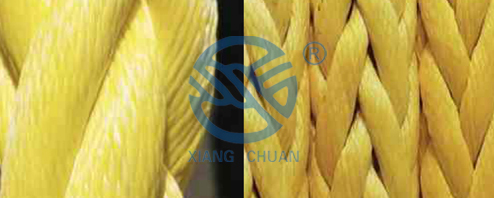
Endless slings (also called “endless loop slings” or “round slings” in some regions) feature a seamless closed-loop design made by weaving synthetic fibers into a continuous circle. Unlike flat web slings, they have no visible ends or terminations (e.g., metal hooks, reinforced eyes). The loop is typically constructed in one of two ways:
Braided endless slings: Fibers are braided into a tubular or round loop, creating a flexible, uniform structure that distributes tension evenly across the entire loop.
Woven endless slings: Flat webbing is folded and sewn into a loop, with the seam reinforced to match the strength of the parent material.
A key advantage of this design is its simplicity: the absence of terminations eliminates potential weak points (e.g., frayed stitching at eyelets, bent metal hooks) that often fail first in other sling types. Endless slings also have a consistent cross-section—whether round or flat-woven—which allows them to conform to the shape of the load without creasing or bunching. For example, a braided endless sling wrapped around a cylindrical pipe will maintain full contact with the pipe’s surface, rather than concentrating pressure at specific points.
Flat Web Slings: Flat Strip with Reinforced Terminations
Flat web slings, by contrast, consist of a flat, wide strip of woven synthetic webbing (typically 2–12 inches wide) with reinforced terminations at each end. These terminations are the defining feature of flat web slings and are designed to connect to lifting equipment:
Eye-and-eye terminations: The ends of the webbing are folded back and sewn into reinforced loops (eyes), which can be directly attached to crane hooks or shackles.
Hook terminations: Metal hooks (e.g., J-hooks, clevis hooks) are sewn or crimped to the ends of the webbing, providing a quick-connect option for loads with lifting points.
Choker terminations: One end features a loop that allows the other end to pass through, creating a “choker” configuration for securing cylindrical loads.
The flat webbing design is intentional: it maximizes the contact area with the load, reducing pressure per unit area and minimizing the risk of load damage. The terminations, however, add complexity—each termination requires careful stitching or crimping to ensure it can withstand the sling’s rated load. For instance, an eye-and-eye flat web sling must have at least four rows of stitching at each eye to meet industry standards (e.g., OSHA 1910.184), as stitching failure is a common cause of sling accidents.
2. Load Compatibility: Conformability vs. Surface Protection
Another critical difference between endless slings and flat web slings is their ability to handle different load types—specifically, how well they adapt to irregular shapes and protect fragile surfaces.
Endless Slings: Ideal for Irregular, Fragile, or Cylindrical Loads
Endless slings excel at handling irregularly shaped, fragile, or cylindrical loads due to their closed-loop design and flexibility. When wrapped around a load, the loop conforms to the load’s contours, distributing pressure evenly and eliminating “hot spots” that could damage the load. For example:
Cylindrical loads (e.g., pipes, drums): An endless sling can be wrapped around the middle of the cylinder, creating a secure “basket” that prevents the load from rolling during lifting. The loop’s uniform tension ensures the cylinder remains centered, even if lifted at an angle.
Fragile loads (e.g., glass panels, concrete slabs): The flexible loop of an endless sling cushions the load, reducing pressure points that could crack or break the material. Unlike rigid metal slings, the synthetic fiber loop bends slightly under tension, absorbing minor shocks during lifting.
Irregular loads (e.g., machinery parts with protrusions): The loop can be positioned to avoid protrusions, wrapping around stable sections of the load without bunching or slipping. For instance, when lifting a gearbox with external gears, an endless sling can be looped around the housing rather than the gears, preventing damage to the teeth.
A limitation of endless slings, however, is their reduced effectiveness with loads that have defined lifting points (e.g., steel beams with pre-drilled holes). Without terminations, endless slings cannot be directly attached to these points and must be wrapped around the load—an approach that may not be as secure as using a sling with hooks.
Flat Web Slings: Better for Flat, Rigid Loads with Lifting Points
Flat web slings are optimized for flat, rigid loads with clear lifting points (e.g., steel plates, wooden pallets, shipping containers). Their flat webbing design provides two key benefits for these loads:
Maximized contact area: The wide, flat webbing spreads the load’s weight over a larger surface area, reducing pressure and preventing indentation. For example, a 6-inch-wide flat web sling lifting a 10,000-pound steel plate will exert just 1,667 psi of pressure (10,000 lbs ÷ 6 in), compared to a 2-inch-wide endless sling, which would exert 5,000 psi—enough to indent soft steel.
Secure attachment to lifting points: The terminations (eyes or hooks) allow flat web slings to connect directly to pre-existing lifting points, such as shackles on a steel beam or pallet jacks on a shipping container. This eliminates the need to wrap the sling around the load, reducing the risk of slippage.
Flat web slings are less suitable for irregular or cylindrical loads, however. Their rigid terminations make it difficult to conform to curved surfaces, and the flat webbing may bunch up when wrapped around cylindrical objects, creating uneven tension. For example, a flat web sling wrapped around a drum may slide to one end during lifting, causing the drum to tilt. Additionally, the terminations can scratch fragile loads—metal hooks, in particular, may damage painted surfaces or glass if not padded.
3. Force Distribution and Lifting Angles: Uniform Tension vs. Directional Strength
Lifting angles (the angle between the sling and the vertical) significantly impact a sling’s effective load capacity—both endless and flat web slings lose capacity as the angle decreases (i.e., as the sling becomes more horizontal). However, their structural designs lead to differences in how they distribute force and handle off-vertical angles.
Endless Slings: Uniform Tension Across All Angles
Endless slings distribute tension uniformly across the entire loop, regardless of the lifting angle. This is because the closed-loop design creates a single, continuous load path—every part of the loop bears an equal share of the load. For example:
Vertical lifting (90° angle): The entire loop supports the load, with tension evenly split between the two sides of the loop.
45° angle lifting: As the angle decreases, the total force on the sling increases (per basic physics: force = load weight ÷ cos(angle)), but the endless sling’s uniform structure ensures this increased force is spread across the entire loop, not just specific points.
Choker configuration (wrapping the loop around the load and passing one end through the other): Even in this asymmetrical setup, the loop adjusts to distribute tension evenly, reducing the risk of localized stress.
This uniform tension makes endless slings more forgiving of minor angle variations. For instance, if a crane operator accidentally lifts a load at a 30° angle (instead of the intended 45°), the endless sling will absorb the increased force without developing weak points. However, endless slings still have maximum safe angle limits—most manufacturers recommend not using them at angles less than 30°, as the force becomes too great for the synthetic fiber to handle.
Flat Web Slings: Directional Strength Dependent on Terminations
Flat web slings have directional strength, meaning their load capacity depends on the alignment of the webbing and terminations with the lifting angle. The flat webbing is strongest when pulled in the direction of its weave (i.e., along the length of the sling), but weaker when pulled perpendicular to the weave (i.e., across the width). This directional dependence is amplified by the terminations:
Vertical lifting (90° angle): The terminations are aligned with the load’s weight, and the webbing bears tension along its length—this is the flat web sling’s strongest configuration.
45° angle lifting: The webbing remains aligned with the force, but the terminations may experience side loads (lateral pressure) if the angle is not perfectly symmetric. Side loads can bend metal hooks or loosen stitching, reducing the sling’s capacity.
Choker configuration: Flat web slings can be used in chokers, but the webbing may twist, causing the load to shift. Additionally, the choker configuration concentrates tension at the termination point, increasing the risk of stitching failure.
Flat web slings are also more sensitive to angle variations than endless slings. A 5° deviation from the intended angle can reduce a flat web sling’s capacity by 10–15%, whereas an endless sling would only see a 2–3% reduction. For this reason, flat web slings require more precise alignment during setup—crane operators must ensure the sling is perfectly vertical or at the specified angle to avoid overloading.
4. Application Scenarios: Heavy-Duty Versatility vs. Light-to-Medium Precision
The structural and performance differences between endless slings and flat web slings lead to distinct application scenarios, with each type dominating in specific industries and tasks.
Endless Slings: Heavy-Duty Industrial and Construction Applications
Endless slings are preferred for heavy-duty, high-stress applications where load stability and durability are critical. Common use cases include:
Construction: Lifting steel pipes, concrete columns, and prefabricated building components. The endless loop’s ability to conform to cylindrical pipes and irregular columns makes it ideal for construction sites, where loads vary widely in shape.
Manufacturing: Moving large machinery (e.g., CNC machines, presses) and industrial equipment. The uniform tension of endless slings prevents damage to delicate machine parts, even when lifting loads weighing 50,000 pounds or more.
Oil and gas: Handling drilling pipes, well casings, and storage tanks. Endless slings are resistant to oil and chemicals (especially nylon and polyester variants), making them suitable for harsh offshore or refinery environments.
Endless slings are also popular in applications where slings are reused frequently. Their simple design (no terminations to replace) means they can withstand hundreds of lifts without significant wear, reducing replacement costs over time.
Flat Web Slings: Light-to-Medium Logistics and Warehousing Applications
Flat web slings are more common in light-to-medium lifting tasks where load protection and quick attachment are priorities. Typical applications include:
Logistics and warehousing: Lifting pallets of goods (e.g., boxes, bags) and shipping containers. The flat webbing protects packaged goods from damage, and the eye-or-hook terminations allow fast connection to pallet jacks or forklift attachments.
Automotive: Moving car bodies, engines, and components during assembly. The wide webbing spreads tension across the car body, preventing dents or scratches, while the hooks can be quickly attached to lifting points on the engine block.
Agriculture: Handling bales of hay, grain bags, and farm equipment. Flat web slings are lightweight and easy to transport, making them ideal for use on farms, where lifting equipment is often mobile.
Flat web slings are also preferred for “one-off” or infrequent lifts, as they are cheaper than endless slings and easier to store (their flat design takes up less space than a looped endless sling). However, they are not recommended for heavy loads (over 20,000 pounds) or harsh environments, as their terminations and stitching are more prone to damage.
5. Maintenance and Service Life: Simple Inspection vs. Termination Checks
The maintenance requirements and service life of endless slings and flat web slings differ significantly, driven by their structural designs. Proper maintenance is critical for safety—both sling types must be inspected regularly to identify wear, damage, or degradation.
Endless Slings: Simple Inspection, Longer Service Life
Endless slings require minimal maintenance due to their seamless design. Routine inspections focus on three key areas:
Webbing damage: Checking for cuts, frays, or holes in the loop. Since the loop is continuous, even minor damage (e.g., a 1-inch cut) can reduce capacity, so any visible damage requires the sling to be removed from service.
Fiber degradation: Looking for signs of UV damage (fading), chemical exposure (discoloration), or moisture damage (mildew). Synthetic fibers like polyester are resistant to these factors, but prolonged exposure can still weaken the sling.
Tension uniformity: Testing the sling by lifting a light load (10% of rated capacity) and checking if the loop hangs evenly. An uneven loop may indicate internal fiber damage, even if the exterior looks intact.
With proper maintenance, endless slings have a typical service life of 5–7 years (or 500+ lifts), depending on usage. The absence of terminations means there are no parts to replace—if the loop remains intact, the sling can continue to be used.
Flat Web Slings: Complex Inspection, Shorter Service Life
Flat web slings require more rigorous maintenance due to their terminations and stitching. Inspections must cover:
Termination integrity: Checking hooks for bending, cracking, or corrosion; ensuring eyelets are not frayed or stretched; and verifying stitching is intact (no loose threads or broken stitches). Termination damage is the most common reason flat web slings are retired.
Webbing damage: Similar to endless slings, checking for cuts, frays, or holes. However, flat web slings are more prone to edge damage (since their webbing is flat and has exposed edges), which can spread quickly and weaken the entire sling.
Load capacity labels: Ensuring the sling’s rated load label is legible and not damaged. Flat web slings often have labels sewn to the webbing, which can wear off over time—without a legible label, the sling cannot be safely used.
Flat web slings have a shorter service life than endless slings—typically 2–4 years (or 200–300 lifts). Their terminations and stitching degrade faster, especially with frequent use, and replacing a damaged termination is often not cost-effective (it is cheaper to buy a new sling than to repair stitching).
Conclusion
Endless slings and flat web slings are both valuable tools in industrial lifting, but their differences in structural design, load compatibility, force distribution, application scenarios, and maintenance requirements make them suited for distinct tasks. Endless slings—with their closed-loop design, uniform tension, and durability—are ideal for heavy-duty, irregular, or fragile loads in construction, manufacturing, and oil and gas industries. Flat web slings—with their flat webbing, directional terminations, and load protection—excel at light-to-medium lifts of flat, rigid loads in logistics, automotive, and agriculture.
Choosing between the two requires a clear understanding of the load’s characteristics (shape, weight, fragility), the lifting environment (harsh vs. mild), and the frequency of use. By matching the sling type to the task, operators can ensure safe, efficient lifting, minimize load damage, and extend the life of their lifting equipment. Ultimately, there is no “better” sling—only the right sling for the job.

 Español
 Portugues
 Pусский
 Français
 Deutsch
 日本語
日本語
 한국어
한국어
 العربية
 Italian
 Nederlands
 Ελληνικά
 Svenska
 Polski
 ไทย
ไทย
 Turkish
 हिन्दी
 Indonesia
 Melayu
 Tiếng Việt
 dansk
dansk
 Magyar
 বাংলা
বাংলা
 čeština
 Soomaali
 မြန်မာ
 فارسی
فارسی
 українська
 norsk
norsk
 Gaeilge
 беларускі
 Română
 ພາສາລາວ
 Filipino
 lietuvių
 Cymraeg
 Suomalainen
 o'zbek
 اردو
اردو
 հայերեն
 سنڌي
سنڌي
 Hrvatski
 íslenskur
 galego
 català
 Zulu South Africa
 ಕನ್ನಡ
ಕನ್ನಡ
 Indonésia Sunda
 Кыргызча
 тоҷикӣ
 Србија
 Hawaii
 नेपाल
नेपाल
 euskara
 latvija
 پښتو
پښتو
 საქართველოს
 bosna
bosna
 Eesti
Eesti
 Azerbaijani
 Shqipëria
 Malta
Malta
 Kikongo
 Eʋegbe
 Fiji
Fiji
 Tonga
Tonga
 中文站
中文站

 +86-514-88253368



 Phone
Phone
Comment
(0)