
 Español
 Portugues
 Pусский
 Français
 Deutsch
 日本語
日本語 한국어
한국어 العربية
 Italian
 Nederlands
 Ελληνικά
 Svenska
 Polski
 ไทย
ไทย Turkish
 हिन्दी
 Indonesia
 Melayu
 Tiếng Việt
 dansk
dansk Magyar
 বাংলা
বাংলা čeština
 Soomaali
 မြန်မာ
 فارسی
فارسی українська
 norsk
norsk Gaeilge
 беларускі
 Română
 ພາສາລາວ
 Filipino
 lietuvių
 Cymraeg
 Suomalainen
 o'zbek
 اردو
اردو հայերեն
 سنڌي
سنڌي Hrvatski
 íslenskur
 galego
 català
 Zulu South Africa
 ಕನ್ನಡ
ಕನ್ನಡ Indonésia Sunda
 Кыргызча
 тоҷикӣ
 Србија
 Hawaii
 नेपाल
नेपाल euskara
 latvija
 پښتو
پښتو საქართველოს
 bosna
bosna Eesti
Eesti Azerbaijani
 Shqipëria
 Malta
Malta Kikongo
 Eʋegbe
 Fiji
Fiji Tonga
Tonga 中文站
中文站
 +86-514-88253368
Mooring Tails
Mooring tails are critical components in modern marine mooring systems, designed to provide elasticity, shock absorption, and controlled load transfer between a vessel and its primary mooring lines or anchors. They are typically installed at the vessel end of wire or chain moorings to reduce dynamic loads caused by waves, swell, current, and vessel motions such as surge, sway, and heave.A mooring tail is usually fabricated from synthetic rope materials, most commonly nylon or polyester, and in some applications high-modulus fibers such as HMPE. Nylon tails are valued for their high elasticity and excellent energy absorption, which helps damp sudden load peaks. Polyester offers lower stretch but better dimensional stability and reduced creep, making it suitable where more controlled elongation is required. The choice of material, as well as tail length and diameter, is determined by the mooring configuration, environmental conditions, and the characteristics of the primary mooring lines.In a typical arrangement, the primary mooring line may be made of steel wire or chain, providing strength and abrasion resistance, while the mooring tail introduces the necessary elasticity. By combining these elements, the system can maintain safe tension levels without subjecting deck fittings and hull structures to excessive shock loads. This hybrid approach also enhances fatigue life for both the vessel fittings and the mooring lines, as the tail smooths load variations over time.Mooring tails are often fitted with spliced eyes at both ends to facilitate connection to shackles, thimbles, or other terminal hardware. The splice integrity and protective coverings are essential to prevent chafing and premature wear, especially where the tail may pass over fairleads or come into contact with other lines and steelwork. In demanding environments, additional chafe protection sleeves or polyurethane coatings may be applied in high-wear zones.Inspection and maintenance are central to the safe use of mooring tails. Operators routinely check for external abrasion, cuts, glazing, localized stiffness, discoloration, and reduction in diameter, all of which may indicate damage or degradation. Synthetic fibers can be affected by UV exposure, chemicals, and high temperatures, so proper storage, handling, and retirement criteria are defined in relevant industry guidelines and standards. Regular load monitoring during operations also helps verify that the tails are performing as intended and not being overstressed.Mooring tails are employed across a wide range of maritime applications, including tankers, bulk carriers, container ships, offshore support vessels, and floating offshore units. In tandem, single-point, or jetty mooring systems, they contribute significantly to safety by improving the resilience of the overall mooring arrangement. When correctly selected, installed, and maintained, mooring tails reduce the risk of line failure, protect vessel structures and terminal facilities, and support safe operations under varying environmental and operational conditions.
Products
Category:
-
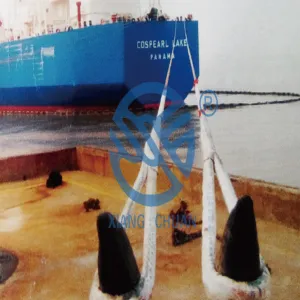
Mooring Tails
Category: Mooring TailsBrowse number: 34444Number:Release time: 2023-11-30 02:21:30Mooring Tails Manufacturers and Suppliers Factory
News
Category:
-
[Industry News]In what areas are marine cables used?
2023-11-30 03:05:49 -
[Industry News]How should we use cables correctly?
2023-11-30 02:34:54 -
[Industry News]Captivating Tales of Mooring: Unraveling the Mysteries
2023-11-30 02:35:14 -
[Industry News]Uncovering the Legends Within 'Mooring Tails': Sea Creatures...
2023-12-05 08:28:14 -
[Industry News]Is it Time to Upgrade Your Boat Docking Experience with Moor...
2023-12-15 06:05:26 -
[Industry News]Mooring Tails: What Stories Do the Ocean's Lighthouses Hold?
2023-12-29 09:15:21 -
[Industry News]Mooring Tails: A Proven Strategy for Secure Boat Anchoring –...
2024-01-09 08:45:27 -
[Industry News]Mooring Tails: A Game-Changer for Docked Ships?
2024-01-12 08:48:49 -
[Industry News]Journey into Aquatic Serenity with "Mooring Tails": What Awa...
2024-01-23 09:10:11 -
[Industry News]Unlocking the Secrets of Mooring Tails: A Comprehensive Guid...
2024-01-24 08:54:37 -
[Industry News]Discover the Fascinating Mooring Tails: A Unique Perspective...
2024-01-25 09:23:02 -
[Industry News]Journey into Mooring Tails: Love, Betrayal, and Heroism in S...
2024-01-26 08:52:28
Case
Category:
No search results found!
Video
Category:
No search results found!
Download
Category:
No search results found!
Job
Category:
No search results found!
Featured Products
-
NEWS
Mooring Tails
Learn more



 Phone
Phone